Description complète
USB-C PD trigger: a modern charger instead of the original power brick
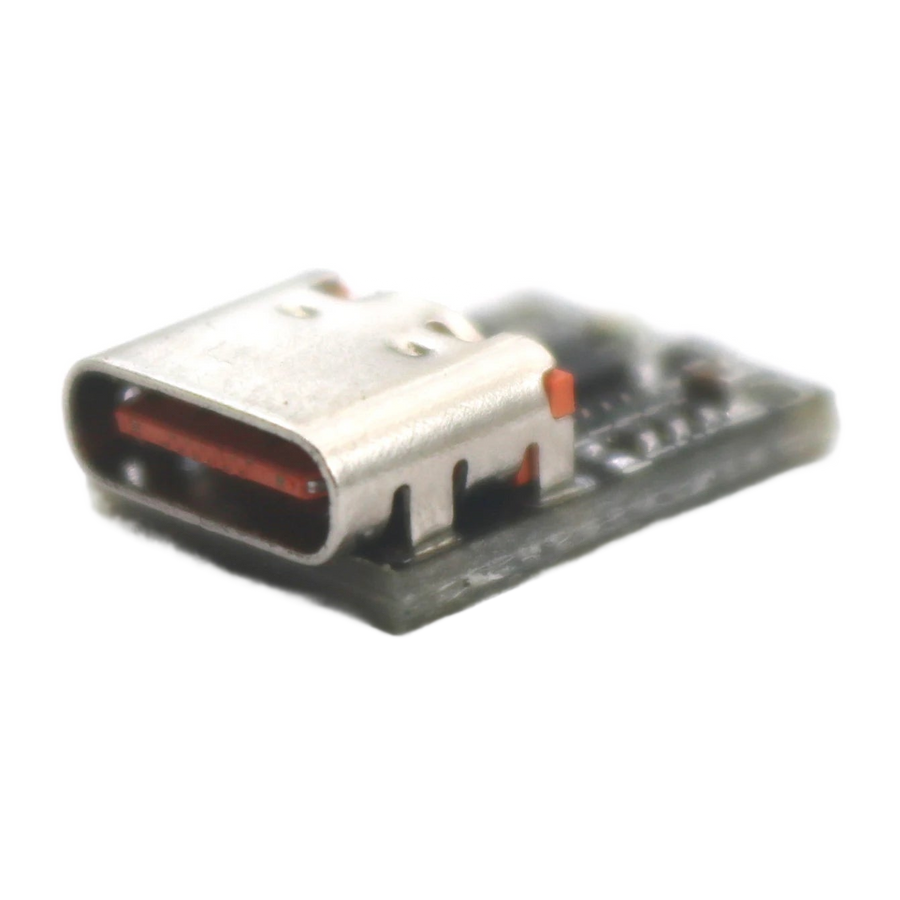
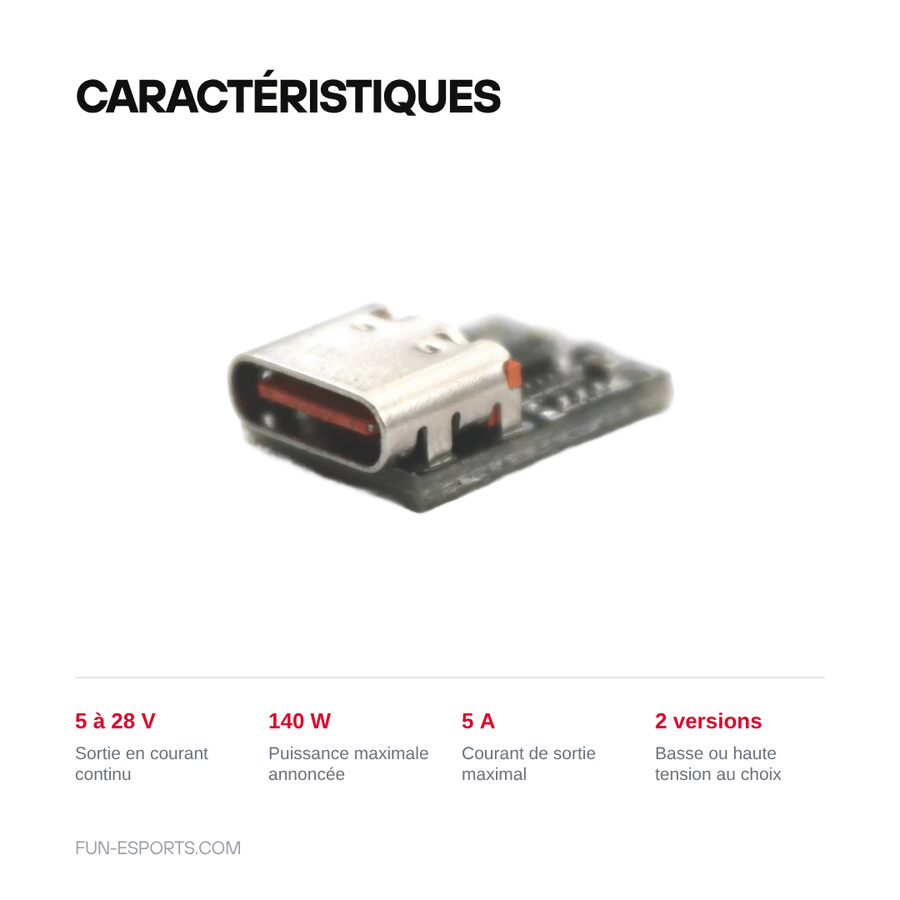
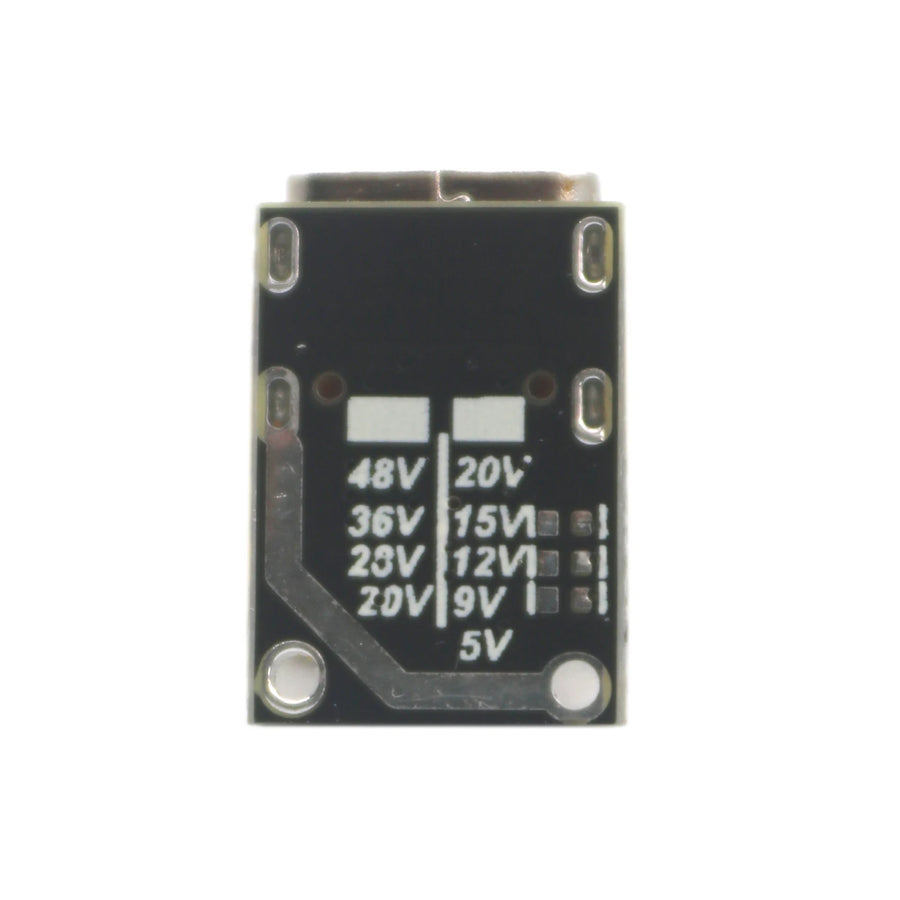
Original power supplies get lost, run hot or eventually give out, and replacing them often costs more than the machine itself. This USB-C Power Delivery module negotiates with a recent charger and delivers a fixed DC voltage — 5, 9, 12, 15, 20 or 28 V — at up to 5 A and 140 W.
What it does
- Selected DC output: the module requests the desired PD profile from the charger, then holds that output voltage for as long as the charger supplies it.
- Up to 140 W: advertised as PD 3.1 and 5 A compatible, enough to power an arcade board, a small monitor, a dock or a Raspberry Pi.
- A power bank instead of a power brick: any sufficiently powerful USB-C PD power bank becomes the power supply for a workshop project.
What it doesn't do
- It does not create voltage. If the charger does not offer the requested profile, you won't get it: 28 V requires a PD 3.1 EPR charger, while a standard 65 W charger tops out at 20 V.
- It does not replace an AC power supply. Several original power bricks, notably for 8-bit and 16-bit machines sold in Europe, output AC: this module only outputs DC.
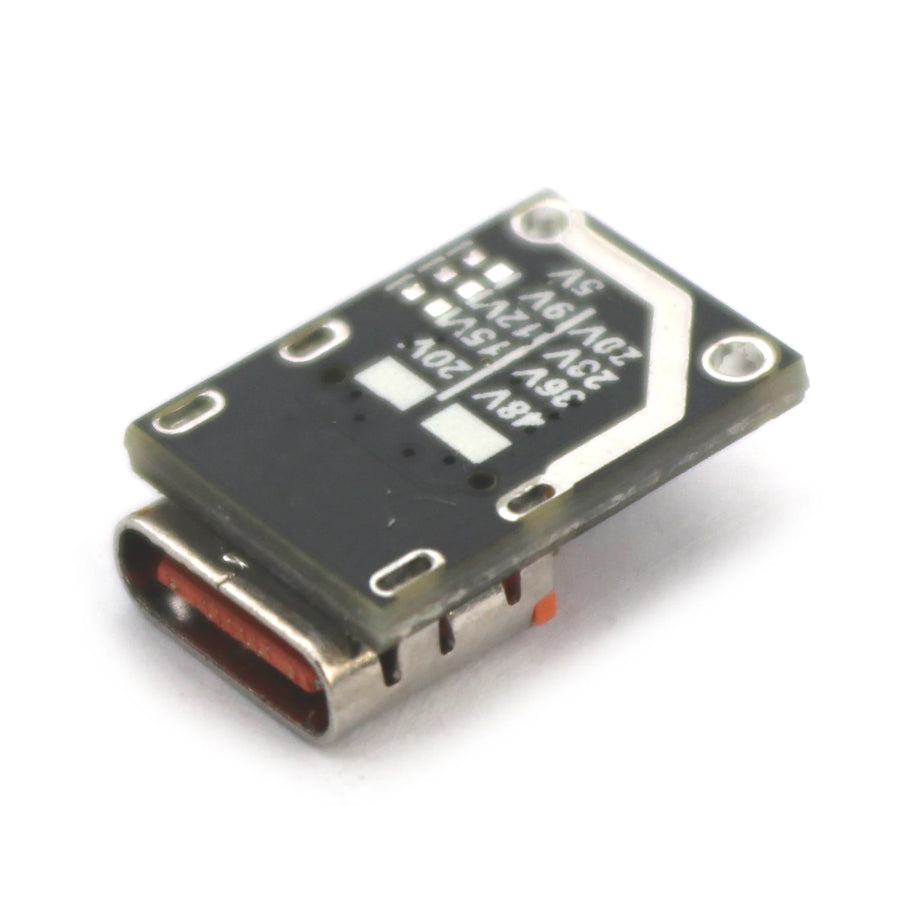
- It is not a charger, a cable or a power lead. It is a bare board designed to be built into a project, not a finished product to plug in as is.
- The supplier documents neither the exact split of voltage steps between the “Low Voltage” and “High Voltage” versions, nor whether reverse polarity protection is present. We therefore make no claim about either.
Compatibility
Input side: a USB-C Power Delivery charger or power bank. The voltage step you get depends on what the charger can supply — 28 V requires the PD 3.1 (EPR) standard. Output side: any device powered by direct current whose voltage is among the steps of the chosen version. Before connecting anything, read the voltage, current and polarity on the machine's label: several retro consoles use centre-negative polarity. Not suitable for AC-powered devices.
Skill level required
Experienced tinkerer. You wire up the DC output yourself, with screw terminals or solder depending on the version, and the module is not protected by a case. Checking voltage and polarity with a multimeter, with the module powered but the console disconnected, is not optional: a wiring mistake is fatal to a collectible machine.
In the box
- 1 USB-C PD to DC voltage trigger module, in the version ordered (Low Voltage or High Voltage)
No charger, no USB-C cable and no output lead: plan for these separately.
Read before ordering: Retro Peripherals
Listing verified on 19 August 2026. Delivery in 10 to 18 days · ships within 3 to 5 days · 2-year legal guarantee · 14-day returns.
USB-C PD to DC voltage trigger — 5 to 28 V, 140 W max
A USB-C charger instead of the power brick: 5 to 28 V DC, up to 140 W.
En stock
📦Ships within 3 to 5 business days · Delivery in 10 to 18 business days · 2-year legal guarantee · 14-day returns.
ℹÀ partir de 150 €, la livraison s’effectue en Point Relais.
- 🇫🇷SAV français
réponse sous 1 jour ouvré - 🛡Garantie légale
2 ans - ↩14 jours
pour changer d’avis - 🔒Paiement sécurisé
CB · PayPal · Klarna
The power brick drawer
Every collection ends up with the same drawer: black transformers that nobody can match to a machine any more. Identifying them takes time, buying replacements is expensive, and an approximate match can damage a board in seconds. A PD trigger replaces that drawer with a USB-C socket and a chosen voltage, checked with a multimeter before connecting.
What a PD trigger actually does
A USB-C charger does not supply 12 or 20 V on its own: it waits to be asked. That is the whole job of this module, which talks to the charger, requests the desired voltage profile and holds it at the output. Two versions are available, one geared towards lower voltages, the other towards higher voltages, up to 28 V and 5 A on a recent PD 3.1 charger.
Check before ordering
It is a bare board, sold without a case, cable or charger: it is built into a project, not plugged in as is. The supplier does not detail the electrical protections or the split of voltage steps between the two versions, and we do not fill those gaps with guesses. Checking with a multimeter remains mandatory before connecting a console.
What this accessory brings
Verified manufacturer specifications · vérifié le
Ce qu’il fait bien
- DC output from 5 to 28 V depending on the version
- Up to 5 A and 140 W, advertised as PD 3.1 compatible
- Lets you power a project from a USB-C power bank
- Module format, can be built into a case or a workshop project
Ce qu’il ne fait pas
- The voltage step you get depends on the charger: 28 V requires a PD 3.1 EPR charger
- DC output only, does not replace an AC power brick
- Bare board, no case, no USB-C cable and no charger
- Reverse polarity protection not documented by the supplier
- Exact split of voltage steps between Low and High Voltage versions not documented
Voir toute la fiche technique+
Matière et format
- Type d’accessoire
- USB-C PD power module
Compatible avec
- USB-C Power Delivery charger
- PD 3.1 EPR charger for the 28 V step
- USB-C PD power bank
- DC devices 5 / 9 / 12 / 15 / 20 / 28 V
- Arcade boards and cabinets
- Raspberry Pi and microcomputers
Dans la boîte
- 1 USB-C PD to DC voltage trigger module, in the version ordered
Frequently Asked Questions
⚡ Do I need a specific charger?
Yes, a USB-C Power Delivery charger or power bank. The voltage step you get depends on the profiles it can supply: 28 V requires a PD 3.1 EPR charger, while a standard 65 W charger tops out at 20 V.
🎮 Can I power a retro console with it?
Yes, if it runs on direct current and its voltage is among the available steps. Read the voltage, current and polarity on the machine's label before connecting anything.
🔌 What is the difference between Low Voltage and High Voltage?
The two versions do not cover the same voltage range: one targets the lower steps, the other the higher steps up to 28 V. The supplier does not publish the exact details, and we won't guess them on its behalf.
🔧 Do I need to solder to use it?
You wire up the DC output yourself, with screw terminals or solder depending on the version. At a minimum, you will need wire strippers, wire of a suitable gauge and a multimeter.
📦 What's in the box?
One USB-C PD to DC voltage trigger module, in the version ordered. No charger, no USB-C cable, no output lead.
🧰 What tools do I need?
A multimeter, essential for checking voltage and polarity before connecting anything, and something to wire up the output: a soldering iron or a small screwdriver depending on the version.
🚚 What are the delivery times?
Delivery in 10 to 18 days, ships within 3 to 5 days.
🛡️ What guarantee applies?
2-year legal guarantee of conformity. 14-day returns. We reply within 1 business day.
Why buy here rather than on a marketplace
It is a fair question. Here is the answer, straight.
Every listing is checked before publication: real compatibility, material, dimensions, box contents. Many models never make it into the catalogue.
A question about compatibility, a fit problem, a return: you write, a human replies within 1 business day. In French.
The 2-year legal warranty of conformity is handled by us — not by a form on the other side of the world. And 14 days to change your mind, with no need to justify yourself.
We do not claim to be the cheapest. We claim that you will know exactly what you are buying before you pay.
Read this before choosing
Our guides to accessories: compatibility, protection, transport.

Pixel art: create your own designs for a Divoom display
Grid size, number of colours, outlines, animation: the guide to getting started in pixel art and displaying your own creations on a Divoom display.
2 min de lecture · publié le

Divoom pixel art speakers: which one should you choose?
Astrotoo, Ditoo-Pro, FlowToo, Tiivoo-2, Timebox-Evo, MiniToo, Fairy-OK: the seven Divoom speakers compared, by use and budget.
2 min de lecture · publié le

Times Frame or Times Frame Pure: which Divoom floating photo frame should you choose?
64 or 32 GB, three colours or just one, a dial or not: the real differences between the Times Frame and Times Frame Pure…
1 min de lecture · publié le