Retro mice
Mice with the look of 8-bit machines and 80s home computers, for a retro desk. Some are real gaming mice under a vintage shell, others simple desk mice. Each product page clearly states what the mouse does not do.
None of them connects to a vintage console: these are mice for PC and Mac.
2 items2 available right now
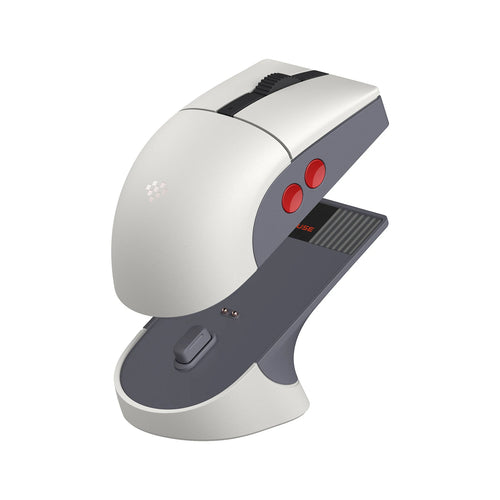
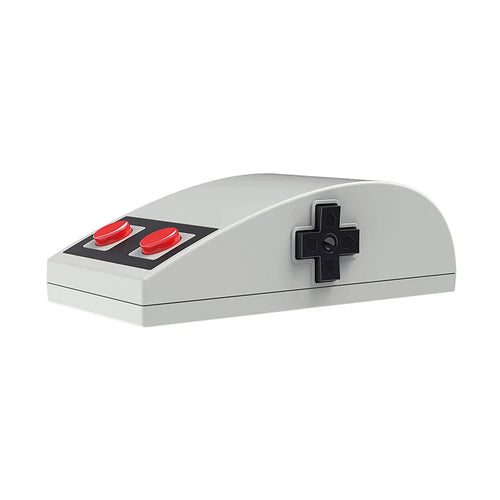
Choosing a retro mouse: the look, and what lies underneath
Questions fréquentes
Do these mice work on a retro console?
No. These are retro-look mice for PC and Mac. None of them connects to a Super Nintendo, a PlayStation or any other vintage console.
What is the difference between the Retro R8 and the N30?
The Retro R8 is a gaming mouse: PAW 3395 sensor up to 26,000 DPI, Bluetooth, 2.4 GHz or cable, rechargeable battery and charging dock. The N30 is a desk mouse: fixed 1,000 DPI, 2.4 GHz receiver, one AA battery and scrolling via a touch surface.
Faut-il un tapis particulier ?
Un tapis en tissu à trame régulière suffit pour un capteur optique et garantit un suivi constant, ce qu'une table vernie ou une surface brillante ne permet pas toujours. La taille compte plus que la matière : en sensibilité basse, un format XXL évite de soulever la souris en plein balayage.